Arsenal Women were formed in 1987 when they amalgamated Aylesbury Ladies and Aylesbury became Arsenal.
Few have a keener insight on that transition than Aylesbury-born Gill Sayell (now Gill Bordman), who was playing for her local team in 1987 when Vic Akers and Gill’s father Bob, who managed Aylesbury at the time, had a conversation about Arsenal absorbing the club.
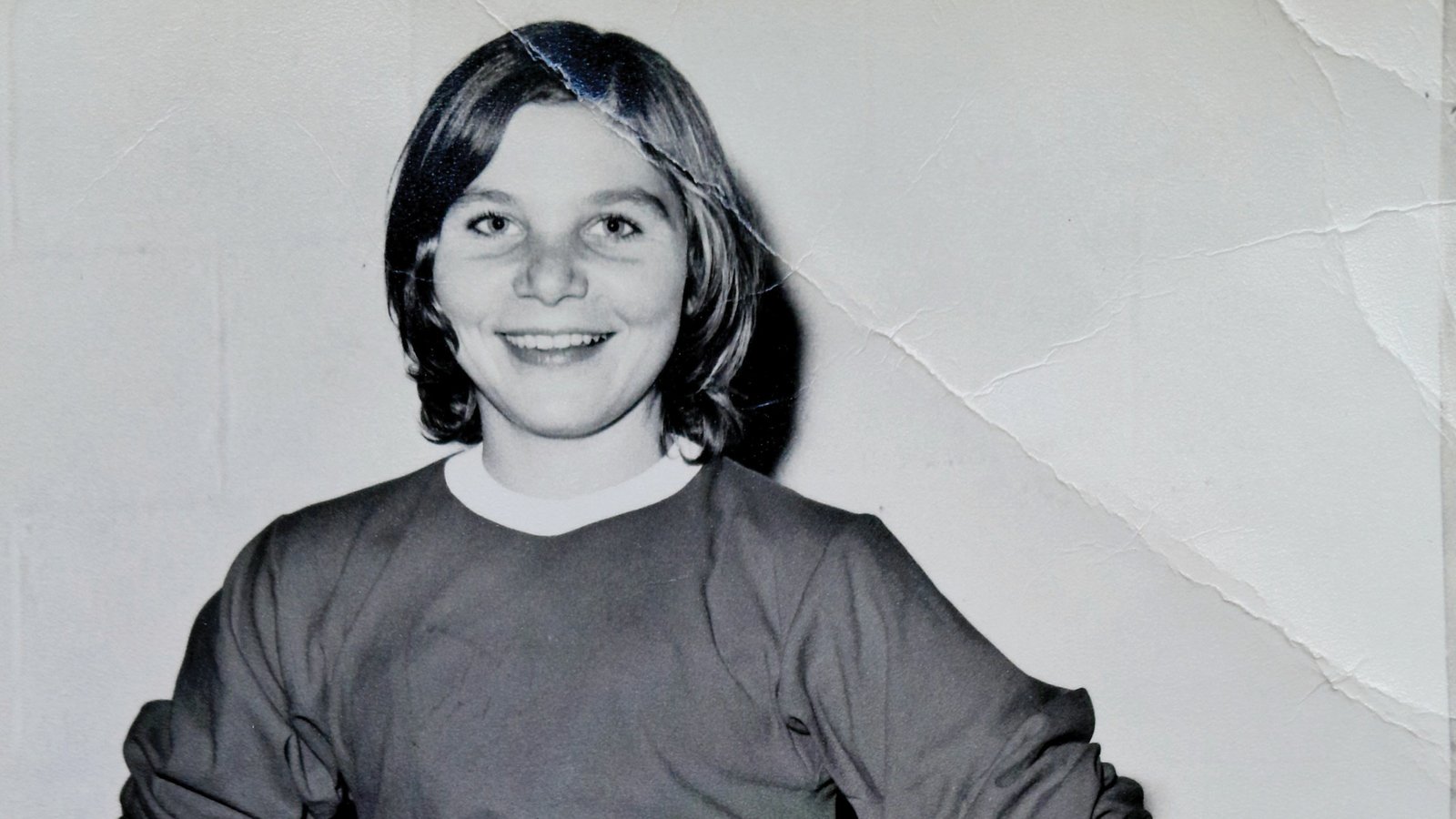
A couple of decades before that conversation, which we will return to later, Gill’s love of playing football was fomenting as a young girl in the 1960s. “I was always a bit of a tomboy, hanging around with my four brothers,” she says.
“We had a green out in front of where I used to live and everyone would get out and play and I joined in. I was the only girl playing. I was always quite sporty and I liked most sports, but football was my first love. If I could get outside with the ball then that’s what I would do.”
While Gill was connecting with her love of playing, organised women’s football was still banned in England in the 1960s – a ban that started in 1921 before being lifted in 1971.
For Gill, her love of the game felt very close to home: “My dad captained the local football team and three of my brothers played locally to a decent standard. One of my brothers did boxing as well.
“My parents were very encouraging. If they saw me or my brothers taking an interest in something, they made sure we could do it. The love grew through family and friends.”
Soon enough, playing on the green near her house was not enough, and Gill wanted a taste of competitive, organised football. She had to creatively circumvent some barriers in order to do so.
“Nothing was going to stop me from playing. I knew I would find a way.”
“To play in a team I had to pretend to be a boy. My friend’s dad started a boys’ team and they asked if I would play. To be part of a team and put on a kit was amazing because there weren’t any other girls in my area playing. My team-mates just called me Bill instead of Gill and I played unbeknownst to the other teams.”
However, things changed for young Gill when her cover was blown by an opposing team. “In one game the other team saw that I was a girl and said they wouldn’t play if I was playing. Their coach agreed and that was it – I wasn’t allowed to play again. I was only eight or nine and I couldn’t play in a team again until I was 12.”
However, Sayell’s love of the game was not going to be denied by red tape and dismissive attitudes: “Nothing was going to stop me from playing. I knew I would find a way.
“If you love the game you just want to play. I was very hurt because I knew I was good enough to play with the boys and the boys in my team wanted me to. I felt rejected, but I just loved it so much.”
Salvation was close at hand.
“My sister-in-law told me there was a girls’ team around ten or 15 miles from Aylesbury called Thame and my dad would drive me there so I could play for them. There were no age categories – I was 12 and playing with 20-year-olds.
“But playing with the boys gave me a good grounding so I could play with older girls without problem.” Sayell achieved an extraordinary landmark very early in her career. At the age of 14, she was selected to represent the British Independents Team at the 1971 Women’s World Cup.
The tournament was organised by the Federation of Independent European Female Football (FIEFF) rather than FIFA – it would be 1991 before FIFA would organise an official Women’s World Cup. British Independents were an unsanctioned team put together by the trailblazing women’s football coach Harry Batt and his wife June.
“I was playing for Thame against Foden Ladies and there were about 200 people watching that day. Harry Batt was watching; he approached my dad and asked if I would be able to come to Mexico to play in the World Cup. My dad asked me and I said I would love to.
“That game was at the end of June in 1971; on August 5 we boarded the plane to Mexico. It was quite a whirlwind; I had never been abroad and didn’t have a passport, which my dad had to sort for me.”
All this is extraordinary enough but it’s even more extraordinary when you remember that Sayell was just 14. “I had chaperones in Mexico, and Harry and his wife June were my guardians. But at home we didn’t even have a house phone so I couldn’t contact my parents while I was out there.
“My parents trusted Harry, they knew I wanted to go and they wouldn’t stop me doing what I wanted to do. They were behind me 100 per cent.”
Sayell says she had two to three training sessions with her England team-mates before the tournament started. The games attracted huge crowds: “We played in the Azteca Stadium in front of 90,000 people. We had no idea that would happen and it would be so big.”
Because the team and the tournament were unsanctioned, upon her return, Sayell received a three-month ban from the FA. Later on, her Thame team began to break up and in 1976, along with many other players from that team, Sayell moved across to Aylesbury Ladies, who were coached by her father Bob. In 1987, things changed.
“My dad managed Aylesbury and my parents were moving abroad to Menorca,” Gill recalls. “There was a girl called Allie Clement who worked alongside Vic Akers at Arsenal in the Community.
“Vic was looking to start a women’s team in the local community and Allie mentioned Aylesbury were going to be managerless and had a strong core of players. Vic had a look and a chat with my dad and it went from there.”
Arsenal, guided by Akers and Alan Sefton from Arsenal in the Community, took Aylesbury over and they became Arsenal.
“Vic installed that professionalism in us from the start; that when you wear the shirt you represent Arsenal and that’s a great privilege.”
“I had my daughter in February 1987 and pulled an Arsenal shirt on for the first time in July,” Sayell says. “To pull on an Arsenal shirt was something special. We were a good side at Aylesbury, but this was such a big jump forward for women’s football to be associated with a professional club.”
Gill says that founder and coach Akers’ role in turning Aylesbury into Arsenal went well beyond administration.
“Vic instilled that professionalism in us from the start: that when you wear the shirt you represent Arsenal and that’s a great privilege. The way the team played and held themselves was totally different. We knew we belonged and we knew we were representing such a prestigious club. We could see it was building.”
Sayell won Player of the Season in Arsenal Ladies’ first campaign in 1987/88 playing as a sweeper. She views the modern version of Arsenal Women with a great deal of pride. “The jump from Aylesbury to Arsenal was big, but when I look at where we are now it’s another big jump. I said to Vic recently, ‘This is what you created.’
“I don’t think at the time we could ever have imagined that this would happen and now I feel even more privileged to have been a part of this journey. I am very proud of the girls in the squad now and the support is crazy. I don’t think there is anything else like it in the world.”
Sayell played for the first six years of Arsenal’s existence until 1993, when the Gunners won the treble in their first season in the top flight. She says it was obvious that the club was set up for success. “Fulham, Millwall, Southampton, Donny Belles were all great teams too, but girls wanted to come to Arsenal.
“The quality of the players that wanted to join was incredible because they knew the set-up with Vic was going to be so professional. Vic put in so much time and effort. He turned down jobs to stay with the team and bring it forwards and build it. The team was building into something special and everyone treated it seriously.”
Sadly, Sayell’s playing career ended in 1993, just as Arsenal were ushering in an era of dominance. “I twisted my knee in the JVC ball court and ruptured my ACL. I was 34 and towards the end of my career. Back then we didn’t have the facilities to rehab – it would have been on the NHS.
“At the age I was I didn’t have the resources to rebuild and the girls that were coming through were younger and quicker; it would have been tough to compete for a first team place. It was a tough decision to make.”
Sayell stayed with the club initially. “I helped out with the reserves for a while, but I couldn’t get into the coaching side. I had to be out there doing it and, because I couldn’t, it was tough to be around it.” After that, Gill’s connection with women’s football was not totally severed.
“I moved to Donegal in Ireland. The FAI found out I had played for Arsenal and they had a programme called Soccer Sisters, so the FAI asked if I would coach some of the young Irish girls. I did that for a few years. Then I moved down to Devon and lost touch with the game a little.”
In recent years, both Arsenal and the FA have re-established contact with Sayell, there was even a documentary about the 1971 World Cup team, called Copa 71, produced by Venus and Serena Williams.
“I’m in Milton Keynes now and I’m falling back in love with the game. I’ve been getting to games at Arsenal and with England. I love going. I’m amazed by the standard – they are true athletes now. I feel like I was born too soon. I wish I could be out there now!”
However, Sayell insists there is no envy when she sees the modern day incarnation of Arsenal Women, regularly playing in front of tens of thousands of fans at the Emirates.
“I’m proud of where my football career went and it’s so nice to have that recognition now and for the current players to know the history too. We’re not jealous, we’re amazed, and I couldn’t be prouder of them all.”
Copyright 2026 The Arsenal Football Club Limited. Permission to use quotations from this article is granted subject to appropriate credit being given to www.arsenal.com as the source.