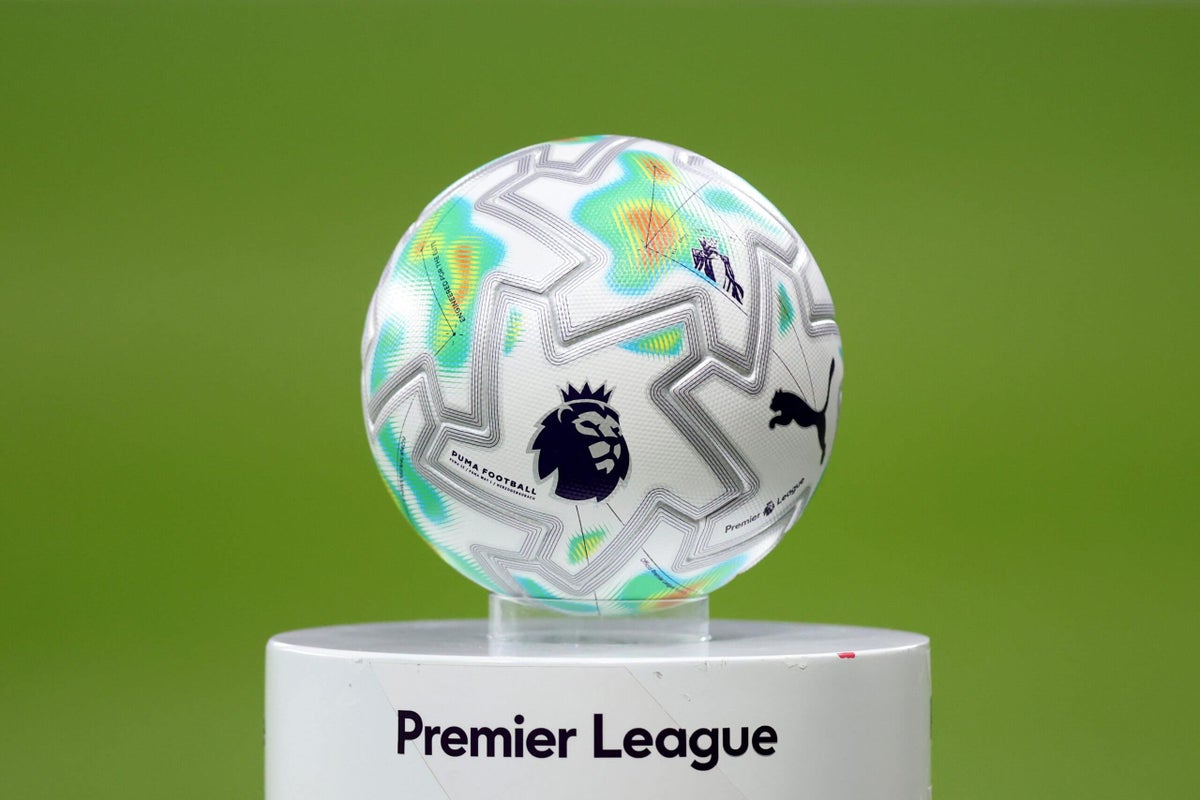
“My players made the decision that they wanted to be around the ball, to respect the ball and show unity and leadership.”
Liam Rosenior’s explanation of the Chelsea huddle just before kick-off against Newcastle last weekend is destined to be one of the most memorable quotes of the season. Not only did referee Paul Tierney loom in the midst of the players’ centre-circle gathering like a sort of PGMOL meerkat, but their head coach also introduced the idea of reverence towards an important, but ultimately inanimate object: the PUMA Orbita Ultimate (Thrill Edition).
All of which begs the question — how exactly do you respect the ball, and where do you do it?
Perhaps the earliest incident of the ball truly being respected came in 1872, when the first official regulations about its dimensions were drawn up by the Football Association. A weight of 14 to 16 ounces was decided upon, and that — contrary to anyone you know who insists that ‘real footballs’, back in the day, were heavier — has been the required weight ever since.
But as interesting as Victorian sports legislators undoubtedly are, this is the Premier League in March 2026. Let’s focus on that instead.
The first decision is how we compare the teams.
The player with the most passes? That’s Virgil van Dijk, but a central defender knocking the ball around at the back doesn’t feel laden with respect. Most shots? That’s Erling Haaland, but leathering it towards goal feels more like respecting the fans than respecting the ball. It’s arguable that Konstantinos Mavropanos respected the ball more by blocking a Haaland shot with his face in last weekend’s game between West Ham and Manchester City. You have to respect his bravery, too.
No, we need to respect the readers and go a bit deeper (much like Chelsea and/or Tierney should have done at around half past five last Saturday). So here are this season’s 20 Premier League clubs split up by where each of them dominates the ball, compared to their peers.
Football is a sport that enjoys a zone, from the probably-apocryphal ‘Back to square one’ days of radio commentary, to the moral panic over zonal marking in the 2000s, to the hushed reverence modern analysts show the fabled ‘Zone 14’.
And now we can add to these the zones of respect. The half-spaces of esteem. Let’s explore them.
The opposition-half campers

These are the alphas of the Premier League, willing to dominate the ball in the most prestigious areas of the pitch — the football equivalent of slapping down a hotel or two on Mayfair and Park Lane in Monopoly.
There’s Arsenal, respecting the right-hand side of the penalty area, a space where Bukayo Saka does so much of his damage. Liverpool favour the left space just outside the 18-yard box, a patch of grass custom-built for Florian Wirtz to probe in.
Manchester City’s passing dominance is slightly deeper (as it must be with the deadly-but-largely-uninvolved Haaland up front), while Manchester United’s red zones seem almost directly mappable to Bruno Fernandes, who may well end up as the 2025-26 Premier League’s player of the season.

Bruno Fernandes treating the ball — if not the quadrant — with the respect it deserves (Stu Forster/Getty Images)
The own-half enjoyers

A big cohort this, and though some may argue it shows a lack of ambition to favour the relative safety of your own half, there’s still narrative to be extracted.
For instance, who’s the biggest personality in the Aston Villa team? Goalkeeper Emiliano Martinez, surely, and just look at Villa’s mastery of their own penalty area.
The very essence of Brentford, meanwhile, can be extracted from their map. A deep block with a distant colony in the opposition 18-yard box, the very space that their long throws get hurled into. Sunderland, in contrast, rarely have a look inside the other team’s penalty area — something they may want to address this summer ahead of what’s already a tough-looking second season back in the top flight.
And do Brighton win the prize for the most condensed respecters — narrow and resolutely in their own half? It’s no surprise, then, to learn that centre-backs Lewis Dunk and Jan Paul van Hecke have hit a combined 4,120 Premier League passes so far this season.

Brentford’s Dango Ouattara respecting a PUMA Orbita Ultimate, Thrill Edition (Adrian Dennis/AFP via Getty Images)
Respect the… touchline?

In many respects, there’s not a more dangerous place for the ball than the touchline. It’s one miscontrol or bad pass from going out of play and — in this era of the multi-ball system — leaving the game completely and being placed gently on a cone as one of its cousins enters the fray as its replacement.
But there are teams who enjoy being out on the flanks. Bournemouth’s and Everton’s maps speak of departures, namely Antoine Semenyo to Manchester City and Jack Grealish to, well, Manchester City too (for treatment on his loan-season-ending foot injury). Nottingham Forest’s preference for the area next to the corner flag is apt for a season where they have already sacked three head coaches, while Tottenham’s love of the right-back zone is perfect for a campaign where they might end up right back where they started (18th, on alphabetical order).
The just-a bit-confusing crew

The impact of Crystal Palace not using wingers is clearly visible here, and I’m starting to develop a theory as to why Burnley have had fewer shots than any other Premier League team this season.
Chelsea – ultimate ball-respecters

All the above leaves one club remaining, and it’s the leaders of this scene, albeit a short-lived one that has now been scrapped by Rosenior.
Even so, could there have been a more perfect conclusion to this experiment than to find out that the area of the pitch where Chelsea dominate passing is on or around the centre spot?
Does this mean a reassessment of the huddle is needed? Were they simply inspecting the very space where they do their best work? Is Opta somehow including stares at the ball pre-kick-off in its analysis of the Premier League?
We simply don’t know. All we can do is thank Rosenior for even making us think about it. Respect.