The Arsenal Foundation has helped to fund Whittington Hospital’s Calm Cove sensory room, which opened recently on their inpatient paediatrics ward. Local parents Owen and Emma Smith-Jaynes were involved, so Owen is perfectly placed to tell us about it and how it will benefit children like their son Harry.
“I’m a proud Welshman, whereas Emma is a Londoner born and bred. We live in Crouch End, a mere two miles from Emirates Stadium, and we have two glorious children: Harry, who is three, and Sienna, who is one. Both were born at The Whittington.
“Harry is a confident, determined, fun and loving little boy. He has an infectious smile and is always full of energy. He has an incredible memory and a sense of direction that puts his parents to shame. He loves the outdoors, is always running, and only ever sits down when there is cake on offer (which every park in Crouch End has somewhere). He is an enthusiastic artist, gets excited by watching trains, and is happiest when there is water to play with (or in).
“Harry has a neurodiversity, which means his brain is experiencing the world in quite a different way. When Harry was 18 months old, we started to notice that he was showing some differences in his play and language. Some of the things we picked up on were that he didn’t respond to his name when called, he didn’t always make eye contact with people, and he liked to play with toys in his own unique ways, for example spinning objects. Harry didn’t start talking as other children did around the same age. He actually really enjoys listening to words and the musicality of language, but for him it is harder to use language to communicate.
“The world can at times be a bit confusing or tiring for Harry. His sensory experience of the world is heightened and he really enjoys things that other people might not notice, like how shadows are moving, or patterns of light. He seeks out music and loves interesting sounds. He manages to communicate very well but has to be very creative doing this when words do not come easily, if at all. It takes Harry longer to learn new skills and adjust to new environments, but he is determined and we know he has huge potential to thrive and enjoy life.
“Going to hospital is a daunting experience for any child, but especially so if your brain is processing many more sound and sight signals than others. The constant sound of machinery, of other children managing their illnesses, the intense lights, and lots of new people can lead to Harry becoming overwhelmed. This makes it hard to engage Harry, and very difficult for any medical professional to examine him. Facilities such as the children’s playroom and sensory room at the Whittington – a quieter, engaging, friendly space that kids can escape into for some quiet time – are even more important for a child like Harry who has heightened sensory needs.
“We were told about the sensory room by the Whittington Health Charity. Having made a donation to the children’s ward, and talked about how it helped Harry, Katherine (the fundraising manager) asked whether we would share our experience, as well as advise as to how the hospital could make the place more accommodating to children with special educational needs and disabilities (SEND). It is an unfortunate truth that not many places consider – or have the money available to make adaptations for – children with special needs; it is also true that even simple and cheap changes can make a big difference. So we were delighted to help support Whittington Health Charity with their work.
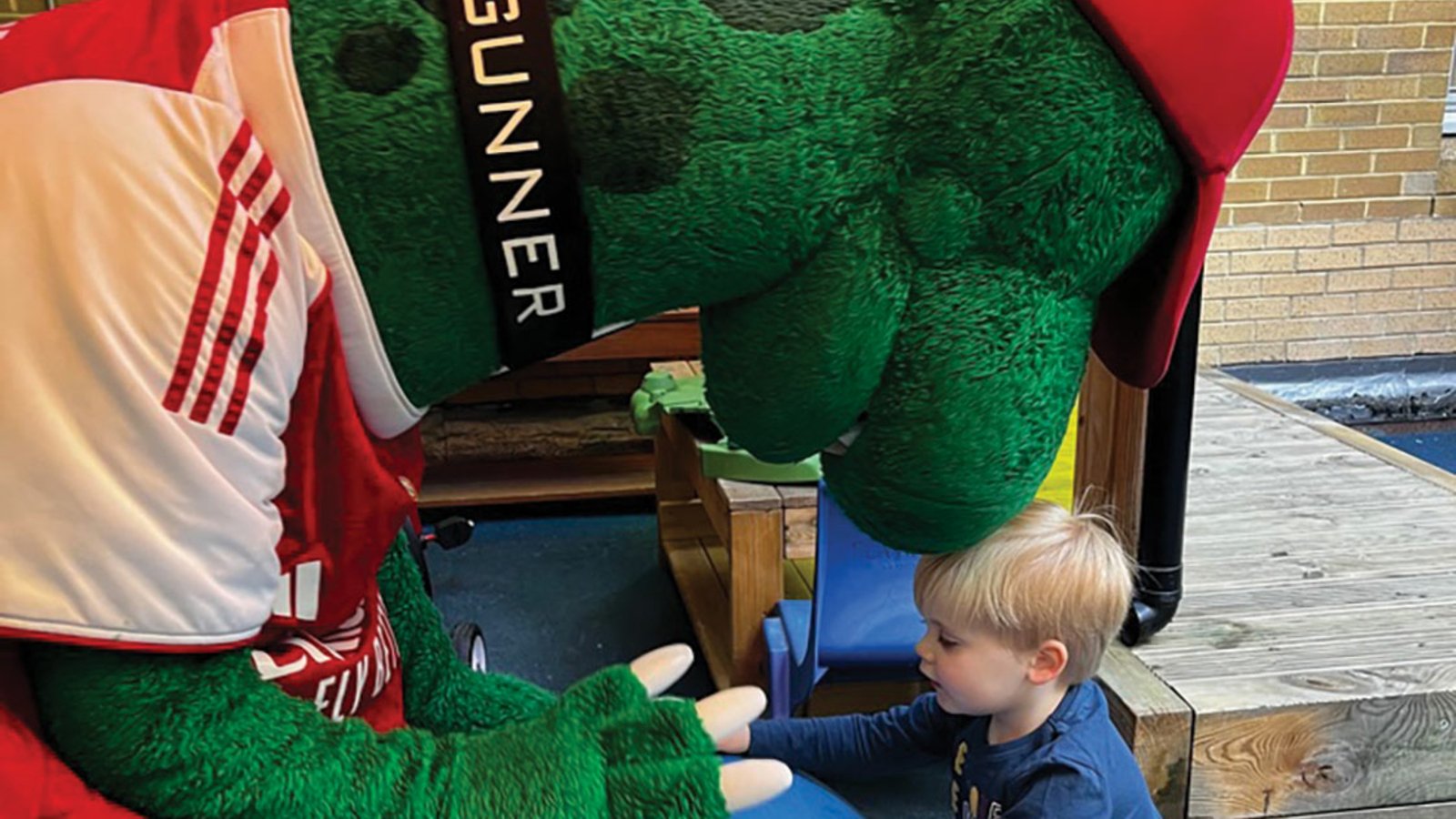
“We visited the sensory room and refurbished children’s playroom at the official opening event. A year before, Harry had been admitted to the children’s ward, and the playroom made such a difference to him and to us during this stay. It helped to make the hospital experience a calm, fun, welcoming one for Harry. He saw the opportunities for fun in the new room immediately; he was drawn to the colourful, light-up bubble tower, and the outdoor garden for running about. His little sister Sienna loved the sensory space too, so it obviously has a very broad appeal. It also helped that Gunnersaurus was there at the launch event. Despite the fact he is an eight-foot tall dinosaur, Harry saw only an exciting playmate who would bounce balls and dance with him. Harry absolutely loved meeting Gunnersaurus and they played happily together for quite some time. Thank you, Gunnersaurus!
“Having a facility like this available will be hugely beneficial to families of children with special educational or extra sensory needs. These children will be better able to access medical treatment, because a calm child who has had time to relax in an engaging sensory space is much better able to tolerate some of the other daunting things that happen at hospital. It can also help kids with faster recovery. I think the space will also offer a boost to parents who will see that the needs of their child have been considered and really thought about in the hospital setting. It’s brilliant to see and we are very thankful for this.
“Football clubs are, at heart, communities. This is how they were formed, and it is why supporters feel so connected to them. In an era where football is big business, it is essential that the community roots of football clubs are protected. There are many local charities that do amazing work with children, often surviving through the goodwill and fortitude of local volunteers, and clubs have the power to make their local communities a better place.”
Whittington Health Charity is continuing to fundraise to make improvements to the Children’s Ward. For more information or to donate visit www.whittingtonhealthcharity.org/our-childrens-ward.
Copyright 2026 The Arsenal Football Club Limited. Permission to use quotations from this article is granted subject to appropriate credit being given to www.arsenal.com as the source.